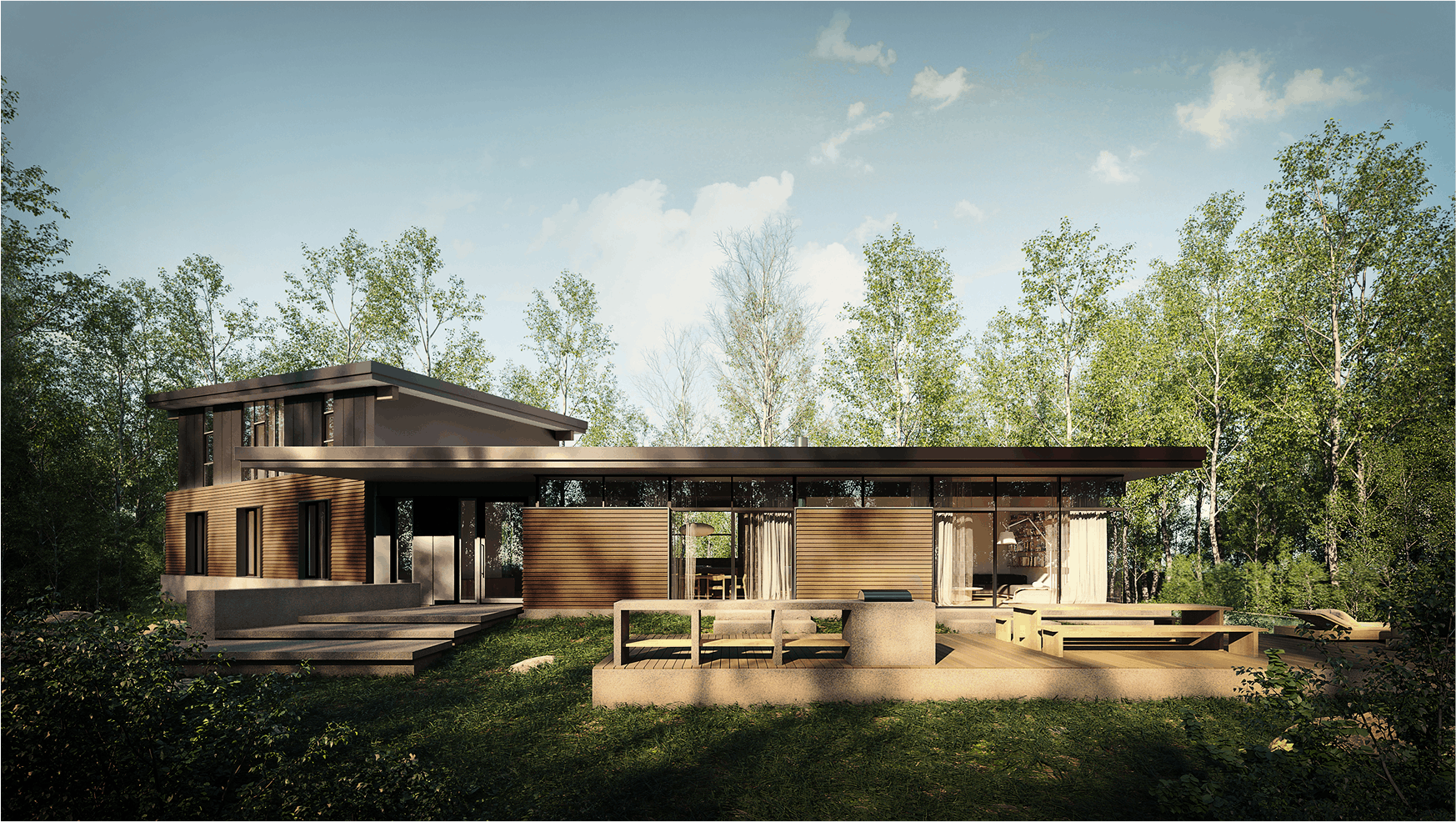
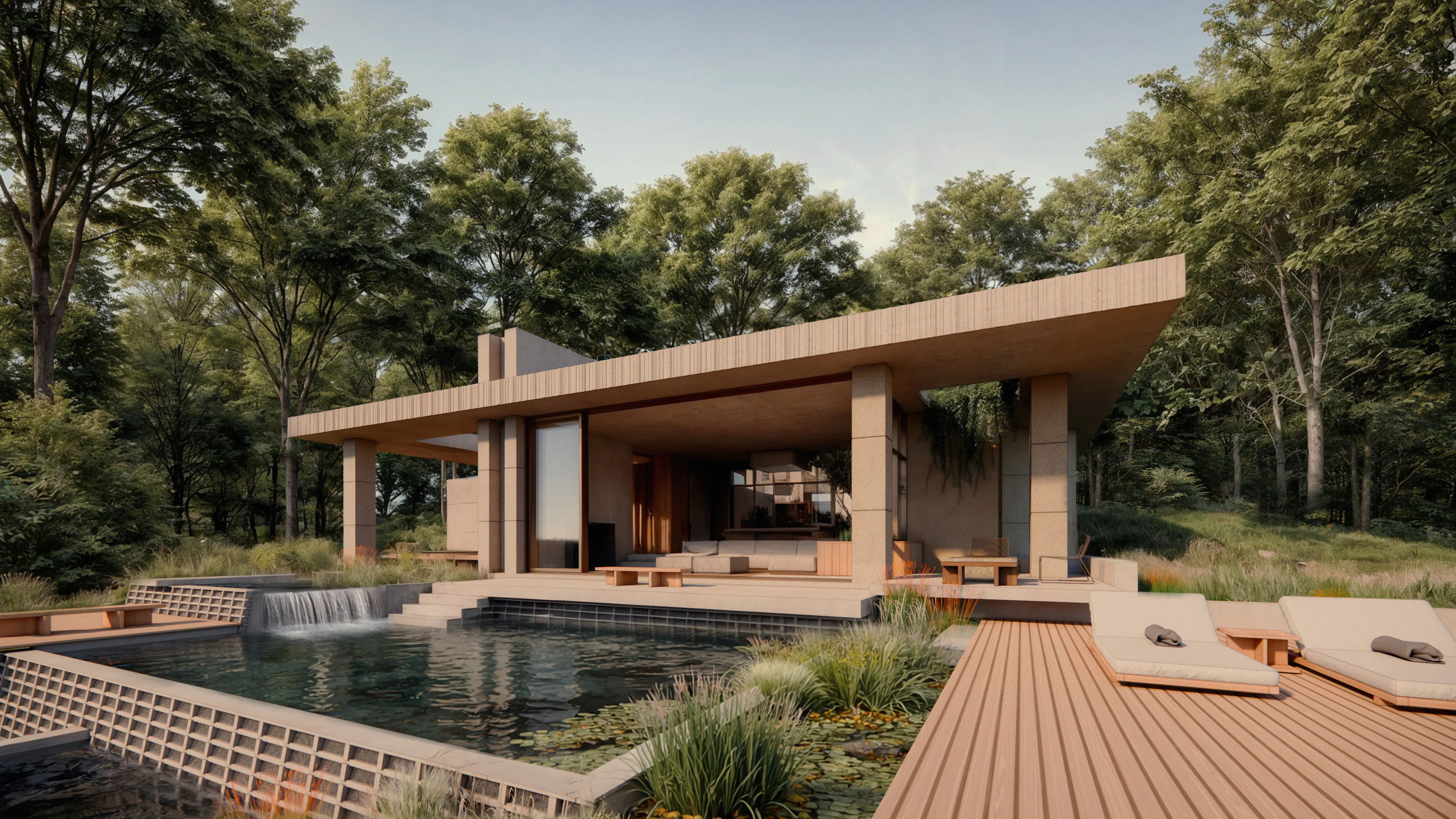
Three agents define the site strategy: humans, agriculture, and ecosystem. A horticultural designer was engaged, and a natural aquatic system was specified to support the site’s regenerative framework.
Earth House
Overview
Designed for permanence, this all-concrete home is embedded into the natural slope, using the earth as a thermal buffer while reinforcing its core against high-severity storms. Structure and landscape operate in symbiosis. Aquascapes and horticultural systems extend across the site, integrating amenities and engulfing the house itself with a green roof system.
Client | Private Homeowner
City | Highlands, North Carolina
Geography | Chattahoochee-Oconee National Forest
Engaged | May 2021 – Current
Current Phase | Preconstruction
Type | Residence & Light Agrotourism
Method | New Construction
Role | Designer. Coordinator. Construction Manager
Services | Architectural Design. Land Use Masterplanning. Horticulture Design. Structural Engineering. Cost Estimating. Subcontractor Management
Features | Environmental Passive Design. Climate Disaster Resiliency. Earth Berm. On-Site Renewable Systems. Greenhouse. Natural Swimming Pool
Size | 2500 square feet
Land | 4.12 acres
Cost | $1.35M, 2019


The concept of a concrete house emerged from climate and site data. Its mass acts as a thermal buffer, absorbing and releasing heat to extend the ambient comfort range during peak summer, reducing reliance on air conditioning.


The unconventional structure was tested prior to design development, evaluating both precast concrete systems and conventional cast-in-place construction for cost feasibility.


A lofted solarium introduces daylight into the portion of the home set largely below grade. Designed as a year-round space for food cultivation, its direct connection to the kitchen embodies a whole-life regenerative approach to design.